
How a Grandmaster Sudoku Race Actually Works
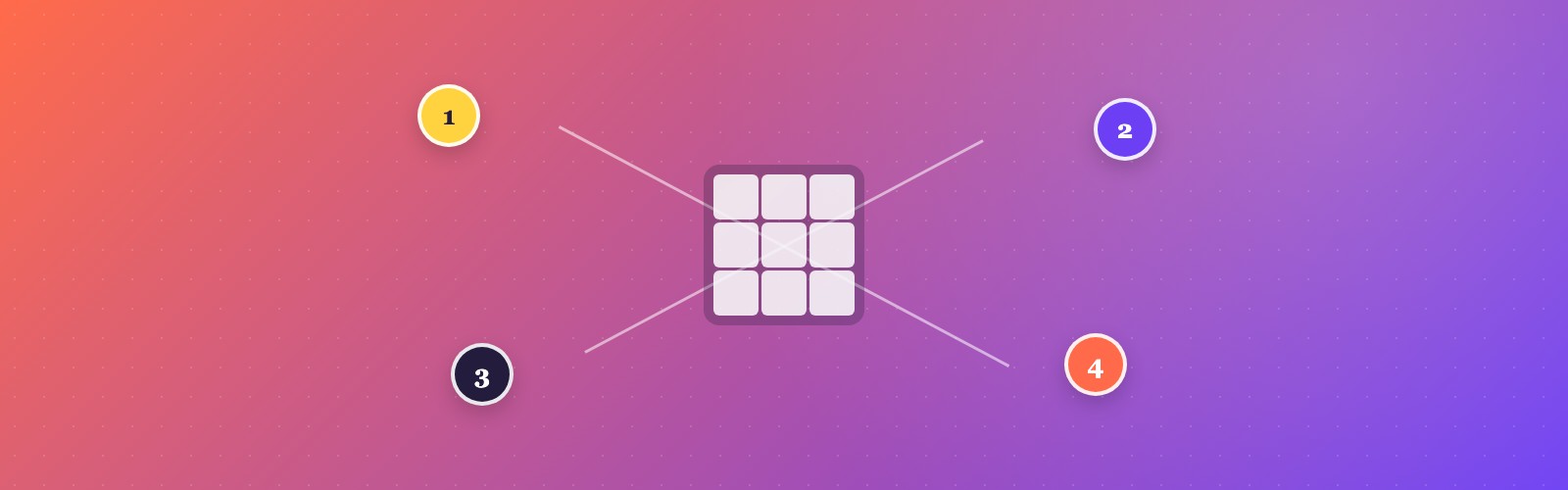
Multiplayer in Grandmaster Sudoku is a race, not a shared board: two to six players get the same puzzle at the same difficulty and solve it independently and privately, and the first correct completion wins.
The part that surprises people is what actually gets sent over the network — which is almost nothing. Every player’s app already contains the same deterministic puzzle generator, so instead of streaming a full grid to every device, the host just shares a room code, and everyone’s client regenerates the identical puzzle locally from a shared seed. No puzzle data crosses the wire at all.
That leaves the server with a much smaller job during the race itself: track how far along each player is. Rather than mirroring anyone’s actual board (which would mean seeing their answers), it tracks structural progress — how many cells are filled, and how many rows, columns, and 3×3 boxes each player has completed correctly. That’s enough to show a live leaderboard without leaking a single digit of anyone’s in-progress grid.
The host explicitly starts the race once enough players have joined, so nothing kicks off before everyone’s ready. When someone finishes, the match ends with a full ranked result — not just a winner and a loser, but where every participant landed based on how much of the grid they’d completed at that moment.
It’s a small architecture choice, but it means a six-player race costs about as much bandwidth as a single-player game, just with a scoreboard attached.